In short
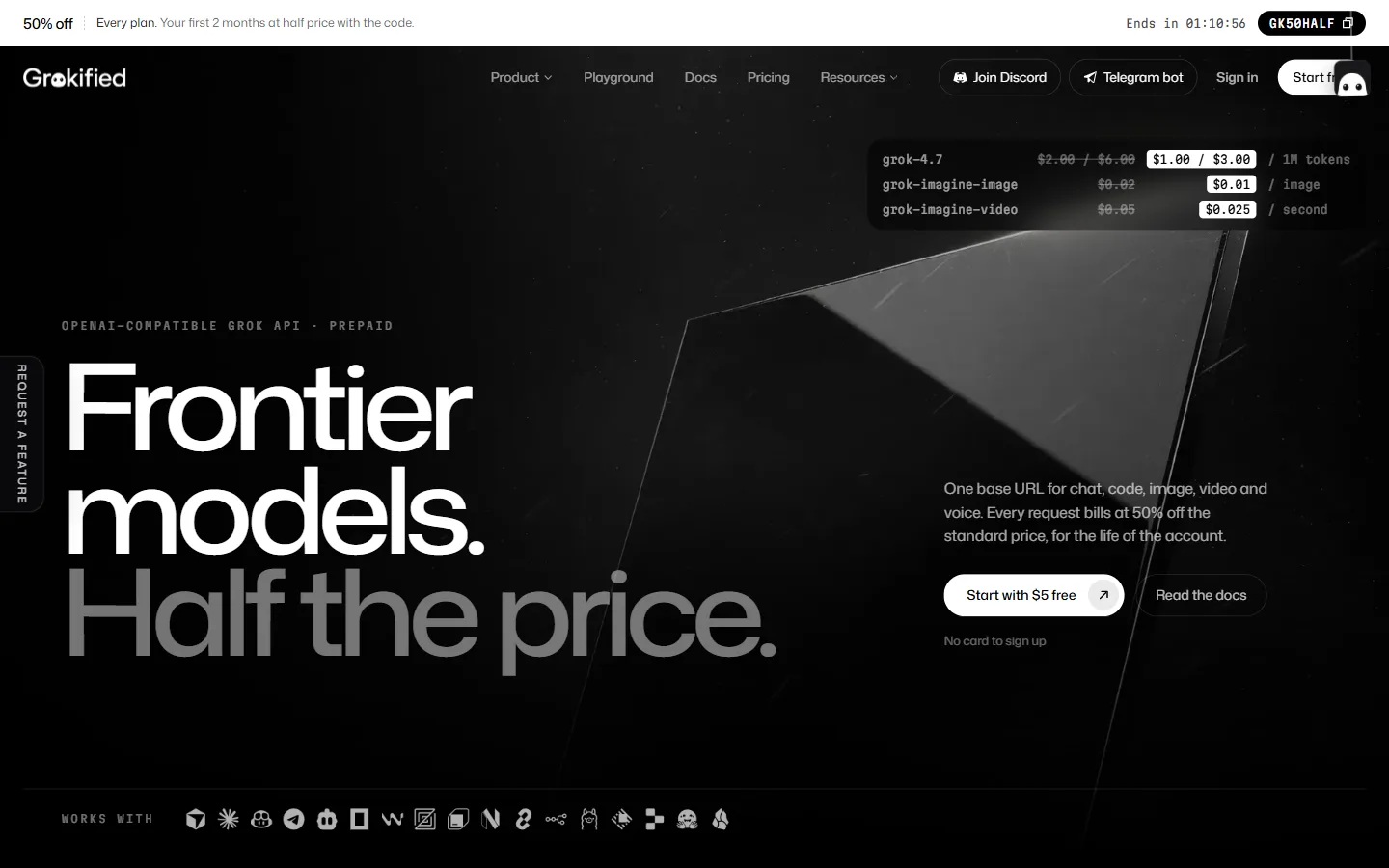
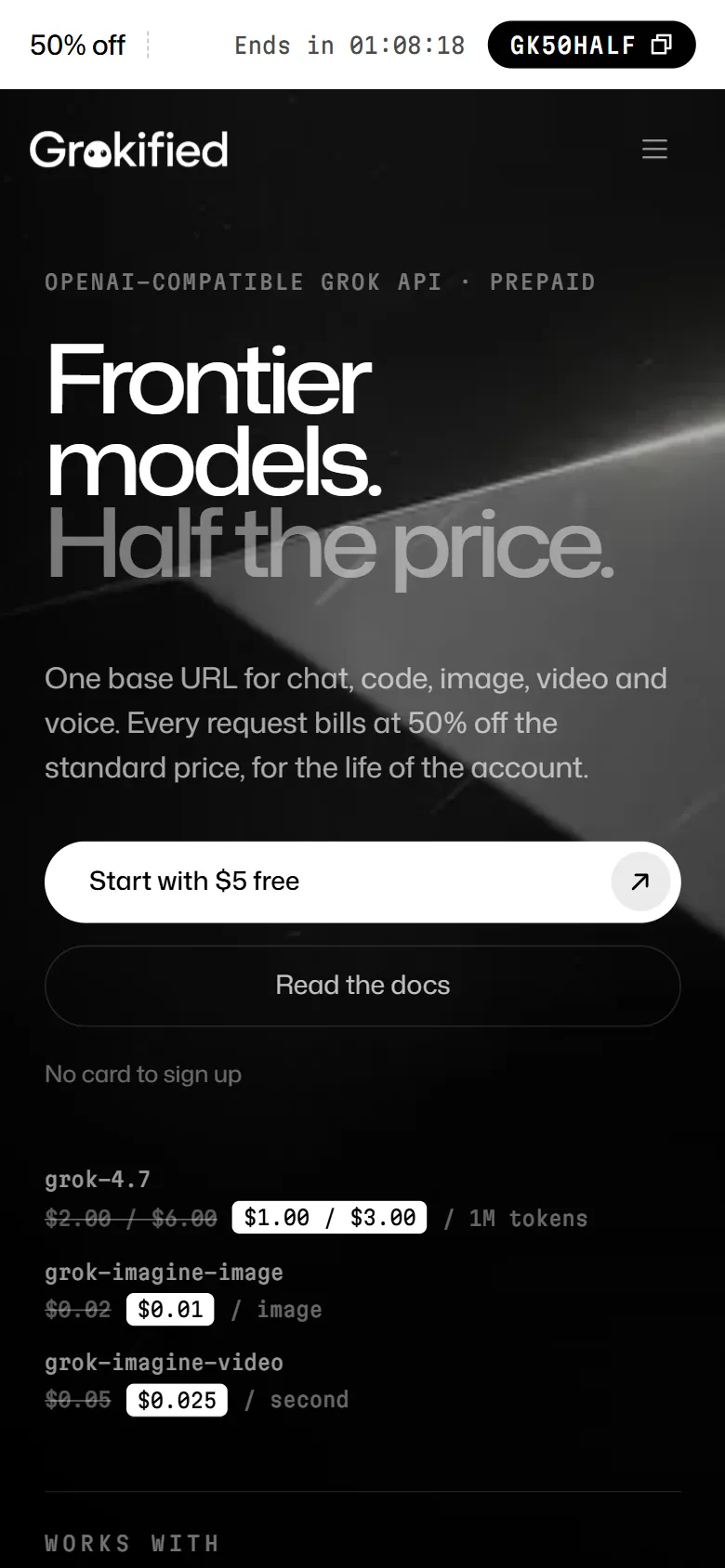
Grokified is our prepaid, OpenAI-compatible API gateway for Grok models, aimed at IDEs and coding agents. Developers change one base URL and keep their existing OpenAI code. We built the API, usage billing, a CLI that configures tools such as Claude Code and Aider, a hosted MCP server, a browser playground and the docs, on Next.js, Supabase and Cloudflare.
Last updated · Built under Dice Technologies, one of our ventures.
What was Grokified built to do?
Developers using Cursor, Claude Code and other coding agents often want to switch models without rewriting their setup. Grokified gives them one base URL for Grok chat, code, image, video and voice models, behind an API that matches OpenAI's endpoints and parameters. The site sums up the migration in one line: change the base URL, nothing else. Claude models are available on the same key as a monthly unlock.
Billing had to be predictable for people running agents all day, so the product is prepaid: you buy credit up front and each request draws it down. The site is clear that Grokified is an independent service, not xAI and not Groq.
What did we build?
The product is an API first, with the tools developers need around it:
- An OpenAI-compatible API at a single base URL, with streaming, function calling, prompt caching, image and video endpoints, and a Messages API.
- Model aliasing: common third-party model IDs resolve to matching models, and retired model names route to their replacements so older code keeps working.
- A CLI you install with npm, pnpm, bun or a shell script. grokified login opens a browser sign-in, and grokified setup writes the config for supported tools, 12 of them on the site, including Claude Code, Codex, opencode, Aider, Zed, Continue and Cline.
- A hosted MCP server that adds Grok search, images, video and voice to Claude, ChatGPT, Grok or Cursor, with OAuth sign-in.
- A signed-in playground for chat, images and video, and a Telegram bot where each topic runs as its own agent on the same balance.
- Docs covering the quickstart, migration, rate limits, errors and usage tracking, plus /llms.txt and /llms-full.txt files for AI assistants.
What were the hard parts?
Compatibility is the whole product. If one parameter behaves differently from OpenAI's API, an agent breaks in a way that's hard to debug. So the gateway matches OpenAI's endpoints and parameters, passes prompts and completions through unchanged, and maps model names, including retired ones, so a config written months ago still works.
Billing transparency was the other big one. Agents can get through a lot of tokens quickly, so every response reports the list price, the amount charged and the remaining balance. Tool calls count towards usage the same way tokens do. Prompt caching is automatic: the prompt prefix is cached after the first turn, with no settings to change.
Data handling had to be stated plainly. The site says nothing sent through Grokified is used to train any model, and that copies of requests and responses are kept for 30 days for the user's own usage history, then deleted.
Which stack did we use, and why?
Grokified runs on Next.js, Supabase and Cloudflare, with PostHog for product analytics. Next.js serves the marketing site, docs, guides and dashboard from one codebase, with the docs rendered on the server so developers can find them through search. Supabase gives us a managed Postgres database for accounts and balances. Cloudflare sits in front of the site for caching and protection.
What are the results so far?
Grokified is live with Basic, Pro and Max monthly plans, and a free sign-up credit that unlocks with the first payment. The site states membership of the Google for Startups Cloud Program, links to its Trustpilot page, and publishes a status page, a changelog and a roadmap.
Building developer tools, APIs or anything that AI agents talk to? Our web app development service covers the same ground: the API, billing, dashboard and docs.