In short
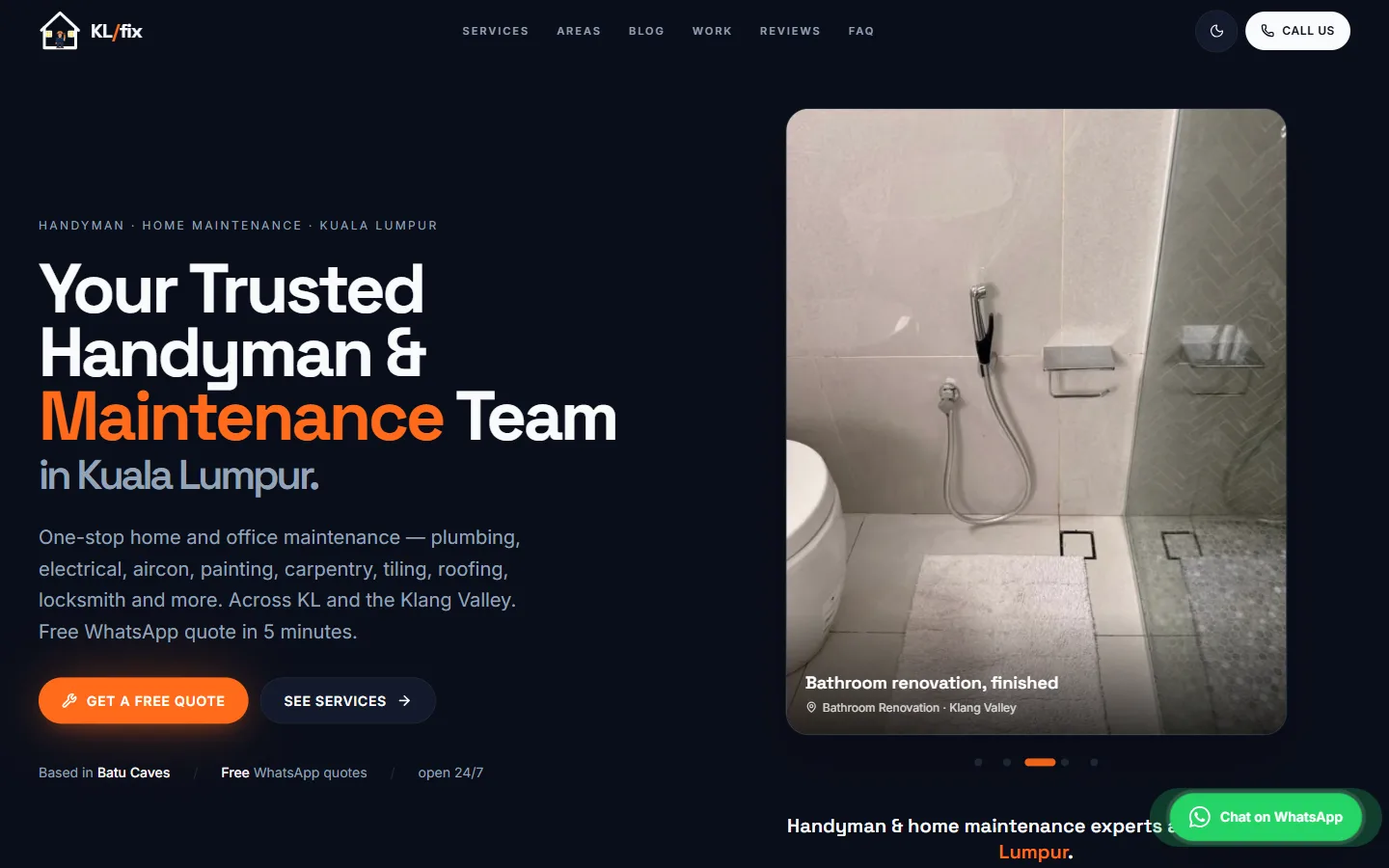
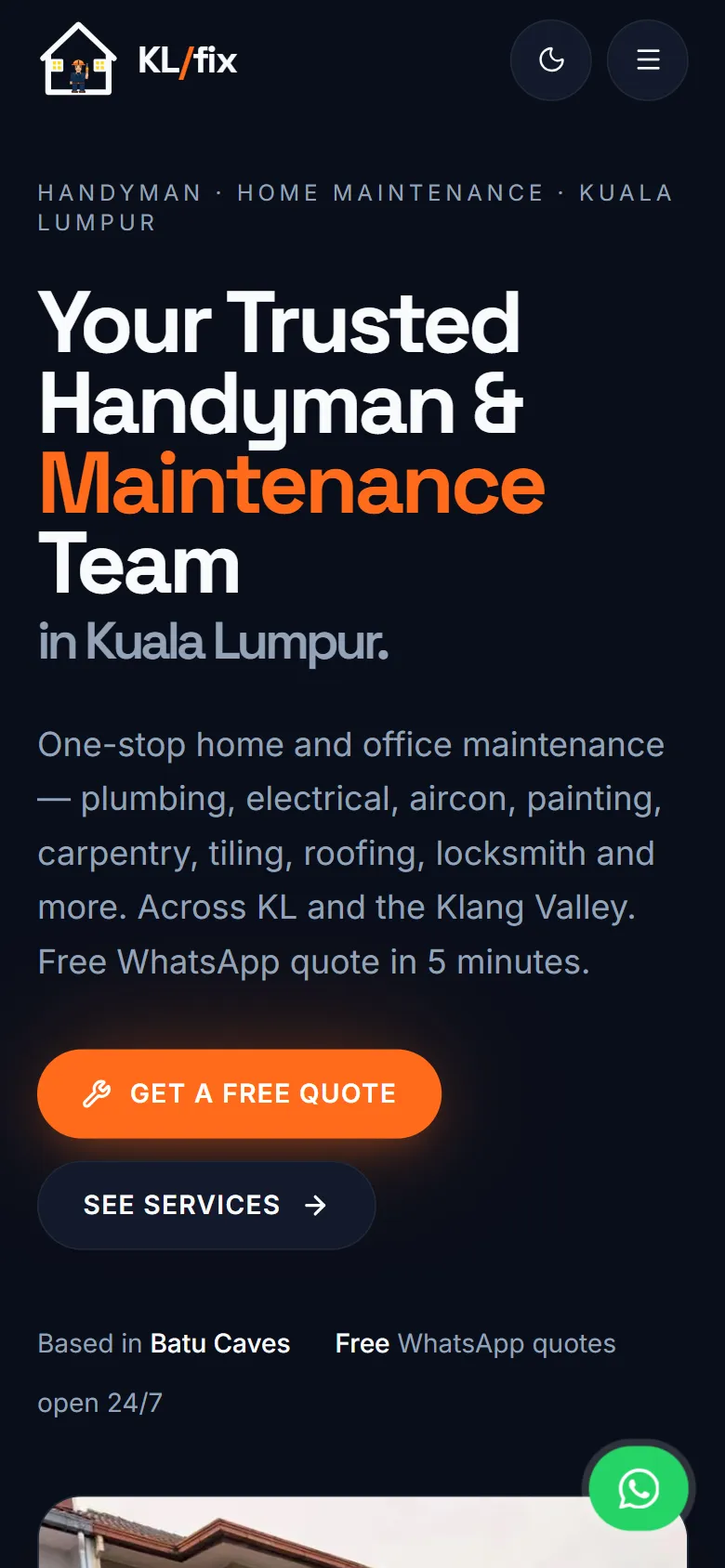
KL Fix is a website we built for a 24/7 handyman and home-maintenance team in Kuala Lumpur and the Klang Valley. Every page leads to a free WhatsApp quote based on a photo. The site has 16 service pages, 16 area pages, four Bahasa Malaysia pages and local business schema, built with Next.js and Tailwind CSS on Vercel.
Last updated
What did KL Fix need?
KL Fix is a handyman and maintenance team based in Batu Caves, Selangor, covering Kuala Lumpur and the wider Klang Valley around the clock. Their customers usually have a problem right now: a leaking pipe, a tripping breaker, an aircon dripping water. They don't want to fill in a form; they want to send a photo and hear back.
So the brief was a site that ranks for local searches, looks like a real local business rather than a template, and turns visits into WhatsApp conversations. The owner chose not to publish prices, because every job is different, so the site had to build trust in other ways.
What did we build?
We built the site around three kinds of landing page, each with its own content, FAQs and structured data:
- 16 service pages, from plumbing, electrical work and aircon servicing to carpentry, tiling, locksmith work, IKEA assembly and office fit-outs.
- 16 area pages for places such as Bangsar, Mont Kiara, Cheras, Petaling Jaya, Subang Jaya and Shah Alam.
- Four Bahasa Malaysia pages for searches like tukang paip and servis aircond, each paired with its English service page through hreflang.
How does a visitor become a lead?
Every page ends in the same action: a WhatsApp chat for a free quote, with phone, Messenger and email as alternatives, and a floating WhatsApp button that stays on screen. The site explains the process in a line: one photo, one quote, one trip.
Around that sit the things that help a customer trust a business they've never used: a gallery of photos from the team's own jobs, a reviews section built from paraphrased customer messages, a link to the Google reviews, payment after the job, and a blog of repair cost guides for Malaysia.
What were the hard parts?
Local service sites tempt you into generating hundreds of near-identical pages: every service in every area. We built those combinations, but most of them stay noindexed and out of the sitemap until they have content that's genuinely specific to the area. Thin pages can drag down how search engines judge the whole site, so only the combinations that earn it are indexed.
Trust took more care than design. A site with no prices has to earn confidence somehow, and the easy route is invented star ratings and job counts. We kept those out: the photos are real jobs, the reviews paraphrase real messages, and the schema describes the areas KL Fix serves instead of a street address, as a service-area business should.
Phones come first for a site like this, so speed mattered. We removed the animation library entirely and moved animation-only components to server components and CSS, which cut the JavaScript each page ships.
Which stack did we use, and why?
KL Fix uses Next.js, TypeScript and Tailwind CSS, hosted on Vercel. Pages are prerendered, so they load quickly and search engines get complete HTML. Service, area and Malay pages are generated from typed data files, so adding an area is a data change, not a new template. The sitemap and llms.txt are generated from the same data, so they never list a page that doesn't exist.
What are the results so far?
The site is live at www.klfix.com with 16 service pages, 16 area pages, four Malay pages and a blog of local cost guides. WhatsApp, phone, Messenger and email clicks are each tracked as key events in Google Analytics, so the owner can see which pages bring in enquiries.
For a business like this, the website is half of the work. Our local SEO service covers the other half: the Google Business Profile, citations and area pages that help a service business show up nearby.